
Saxophone Fingering Chart PDF: A Comprehensive Guide
Navigating the world of saxophone playing begins with understanding fingerings! This guide offers access to readily available PDF charts,
covering essential notes for beginners and advanced players alike.
Discover resources from justforwinds, mcgillmusic, bettersax, and saxophonemasterclass,
providing clear diagrams and comprehensive fingering options for various saxophone types.
Understanding Saxophone Fingerings
Saxophone fingerings represent the core of note production, dictating which keys are pressed to achieve specific pitches. These charts aren’t merely lists; they’re visual maps translating musical intention into physical action. Each fingering corresponds to a unique combination of open and closed keys, influencing the airflow and resulting sound.
Beginner charts typically focus on the fundamental notes within the standard range, building a foundation for melodic exploration. As proficiency grows, players encounter charts detailing extended ranges – including altissimo – and alternative fingerings for smoother transitions and nuanced expression.
Understanding the logic behind these fingerings is crucial. Many notes share common finger patterns, differing only by octave keys or subtle adjustments. Mastering these patterns accelerates learning and enhances musicality. Resources like those from BetterSax and McGill Music emphasize this foundational approach, providing comprehensive guides to unlock the saxophone’s potential. The goal is not just to memorize, but to internalize the relationship between finger placement and sonic outcome.
Types of Saxophones & Corresponding Charts
The saxophone family encompasses a range of instruments, each with its unique tonal qualities and fingering requirements. Consequently, a “one-size-fits-all” fingering chart is insufficient. Alto, tenor, soprano, and baritone saxophones each necessitate a dedicated chart for accurate note production.
Alto and tenor saxophones are the most commonly encountered, benefiting from a wealth of readily available resources. Charts for these instruments, like those found on JustForWinds, typically cover the standard range and basic fingerings. Soprano saxophones, often straight-bodied, present a slightly different fingering layout, requiring specialized charts.
Baritone saxophones, the largest of the common family, demand charts reflecting their lower register and extended keywork. Resources such as SaxophoneMasterclass offer charts tailored to each saxophone type. When downloading a PDF, always verify it corresponds to your instrument to avoid confusion and ensure accurate practice. Understanding these distinctions is vital for any aspiring saxophonist.
Alto Saxophone Fingering Chart PDF
The alto saxophone, renowned for its bright and versatile tone, is a popular choice for beginners and seasoned players alike. Accessing a dedicated alto saxophone fingering chart PDF is crucial for mastering the instrument. These charts visually represent which keys to press for each note, simplifying the learning process.
Numerous online resources offer free alto saxophone fingering charts. JustForWinds provides a downloadable PDF covering basic notes, while BetterSax offers a comprehensive guide. McGillMusic also presents a chart encompassing standard and altissimo ranges. These charts typically utilize a clear diagrammatic approach, with darkened circles indicating closed keys.
Beginners should prioritize charts highlighting fundamental notes, gradually expanding their knowledge to include more complex fingerings. SaxophoneMasterclass offers a free chart and instructional videos. When selecting a PDF, ensure it’s clearly labeled for alto saxophone and features legible diagrams. Consistent practice with a reliable chart will accelerate your progress and build a solid foundation.

Tenor Saxophone Fingering Chart PDF
The tenor saxophone, celebrated for its rich and powerful sound, demands a clear understanding of its unique fingering system. A dedicated tenor saxophone fingering chart PDF is an invaluable tool for players of all levels, providing a visual roadmap to navigate the instrument’s keys;
Several online platforms offer free, downloadable tenor saxophone fingering charts. Resources like JustForWinds and McGillMusic provide comprehensive charts detailing standard and extended range fingerings. These charts typically employ a straightforward visual representation, using darkened circles to denote keys that should be depressed.
For beginners, focusing on charts that illustrate basic notes is essential. Gradually incorporate more complex fingerings as proficiency grows. BetterSax offers a detailed guide, and SaxophoneMasterclass provides a free chart alongside instructional materials; When choosing a PDF, verify it’s specifically designed for tenor saxophone and features easily understandable diagrams. Consistent practice with a reliable chart will significantly enhance your playing ability.
Soprano Saxophone Fingering Chart PDF

The soprano saxophone, known for its bright and penetrating tone, presents a unique fingering experience compared to its alto and tenor counterparts. A dedicated soprano saxophone fingering chart PDF is crucial for mastering this instrument, offering a visual guide to its key layout and note production.
Finding a reliable PDF chart is readily achievable online. Resources like JustForWinds and McGillMusic offer downloadable charts specifically tailored for the soprano saxophone. These charts typically illustrate finger positions with clear diagrams, often using darkened circles to indicate keys to be pressed.
Beginners should prioritize charts displaying fundamental notes and fingerings. As skill develops, explore charts that include alternate fingerings and extended range options. SaxophoneMasterclass provides a free chart alongside learning resources. Ensure the chosen PDF is specifically for soprano saxophone to avoid confusion. Consistent practice utilizing a well-designed chart will accelerate your progress and improve your overall technique on this distinctive instrument.
Baritone Saxophone Fingering Chart PDF

The baritone saxophone, the lowest-pitched member of the saxophone family, demands a specific understanding of its fingering system. A dedicated baritone saxophone fingering chart PDF is essential for navigating its extended range and complex keywork. These charts visually represent the finger placements needed to produce accurate notes.
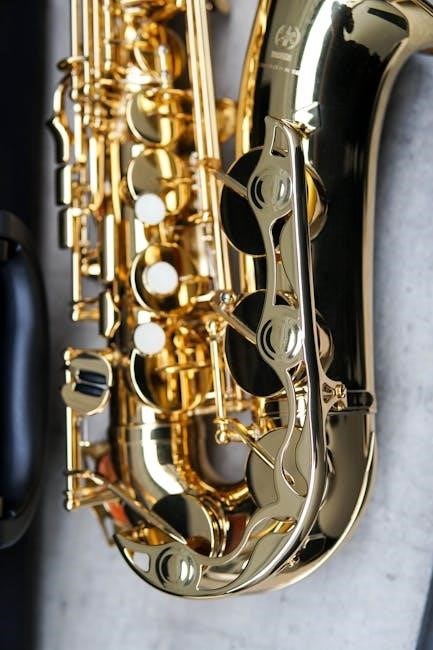
Locating a suitable PDF chart online is straightforward. Resources like JustForWinds provide downloadable charts designed specifically for the baritone saxophone. These charts typically employ clear diagrams, often utilizing darkened circles to denote keys that should be depressed. McGillMusic also offers comprehensive resources.
Beginners should focus on charts illustrating basic fingerings and fundamental notes. As proficiency grows, explore charts that showcase alternate fingerings and techniques for accessing the instrument’s lower register. Consistent practice with a reliable PDF chart is vital for developing accurate technique and mastering the baritone saxophone’s unique tonal qualities. Remember to verify the chart is specifically for baritone saxophone to avoid errors.
Basic Fingerings for Beginners
Embarking on your saxophone journey requires mastering fundamental fingerings. Beginner saxophone fingering chart PDFs prioritize the most commonly used notes, providing a solid foundation for musical expression. These charts typically focus on the core finger positions for notes within the first octave, simplifying the learning process.

Essential starting points include B, A, G, F#, and E. Charts from resources like JustForWinds and BetterSax clearly illustrate these positions, often using visual cues like darkened circles to indicate which keys to press. Focus on developing muscle memory for these basic fingerings before progressing to more complex combinations.
Consistent practice with a beginner-friendly PDF chart is crucial. Start slowly, ensuring accurate finger placement and a clear tone. Gradually increase tempo as proficiency grows. SaxophoneMasterclass offers free resources to aid in this process. Remember, a strong foundation in basic fingerings will unlock more advanced techniques and musical possibilities.

Reading a Saxophone Fingering Chart
Decoding a saxophone fingering chart is essential for successful playing. Most charts visually represent the saxophone keys, with darkened circles or filled shapes indicating keys that should be pressed down to produce a specific note. Understanding this visual language is the first step.
Charts typically display fingerings for a single octave at a time. Pay attention to the note names (e.g., C, D, E) and their corresponding finger positions. McGillMusic’s charts are excellent examples of clear visual representation. The layout often organizes fingerings horizontally, progressing from lower to higher notes within the octave.
Look for symbols indicating octave keys and alternate fingerings. Some charts, like those found on BetterSax, may include symbols for trills or extended range fingerings. Beginners should focus on mastering the primary fingerings before exploring these advanced options. Consistent practice with a well-designed PDF chart will quickly build your reading comprehension and playing skills.
Key Symbols and Notation on Charts
Saxophone fingering charts utilize specific symbols to convey crucial information beyond basic key presses. Darkened circles consistently denote keys to be held down, forming the foundation of note production. However, charts often incorporate additional markings for nuanced playing.
Octave key symbols are paramount; these indicate which keys extend the instrument’s range. Charts from sources like McGillMusic clearly illustrate these. Alternate fingerings, presented as options for the same note, are frequently shown – these can aid in smoother transitions or facilitate specific musical phrases.
Symbols for trills and other advanced techniques are also common, though typically geared towards more experienced players. Some charts may use numerical or alphabetical notations to represent specific finger combinations. Understanding these symbols unlocks a deeper comprehension of the chart and expands your playing capabilities. Referencing a key or legend accompanying the chart is always recommended for clarity.
Octave Keys and Their Function
Octave keys are fundamental to expanding the saxophone’s tonal range, allowing players to access higher registers with relative ease. These keys, typically located on the back of the instrument, function by altering the effective length of the vibrating air column within the saxophone.
When engaged, the octave key effectively shortens the air column, resulting in a pitch one octave higher than the corresponding fingering without the key. Saxophone fingering charts, such as those available from BetterSax and McGillMusic, clearly depict the location and activation of these keys.
Different saxophone types feature varying octave key mechanisms. Mastering their use is crucial for navigating the instrument’s full potential. Charts often demonstrate how combining octave keys with specific fingerings unlocks even more extended ranges. Understanding the function of these keys is essential for accurate intonation and expressive playing, moving beyond basic fingerings to explore the saxophone’s complete sonic landscape.
Extended Range Fingerings (Altissimo)
Venturing beyond the standard range of the saxophone leads to altissimo fingerings, techniques used to produce notes above the instrument’s typical upper limit. These fingerings are considerably more complex, often requiring precise embouchure control, alternate key combinations, and a deep understanding of the saxophone’s acoustic properties.

Altissimo charts, though less common in basic fingering guides, are available online and demonstrate these advanced techniques. McGillMusic provides resources exploring these extended ranges. They often involve utilizing multiple keys simultaneously, including those not typically used in standard fingerings.
Mastering altissimo requires dedicated practice and a sensitive ear. Success isn’t solely reliant on the chart; it demands refined breath support and embouchure adjustments. While challenging, accessing the altissimo register unlocks a unique palette of tonal colors and expressive possibilities for the advanced saxophonist, expanding the instrument’s capabilities significantly.
Trills and Advanced Techniques
Beyond basic note production, saxophone playing incorporates techniques like trills, bends, and growls, demanding nuanced fingering control. Trills, rapid alternations between two adjacent notes, are fundamental for ornamentation and expressive phrasing. Fingering charts often indicate common trill pairings, but mastering them requires rhythmic precision and smooth transitions.
Advanced techniques extend beyond simple finger movements. Bends involve subtly altering pitch by adjusting embouchure and breath support while maintaining a consistent fingering. Growls utilize vocalizations within the saxophone’s sound, requiring specific throat and diaphragm control.
Resources like those found on bettersax.com can offer guidance on these techniques, though they aren’t always explicitly detailed on standard fingering charts. Practice exercises, such as progressing from slow to fast rhythmic values for trills, are crucial. Developing these skills elevates saxophone playing from technical proficiency to artistic expression, adding depth and character to performances.
Common Fingering Challenges & Solutions
Many saxophone students encounter common fingering hurdles. One frequent issue is coordinating the left and right hand fingers, particularly during quick passages or complex chord changes. Slow, deliberate practice with a metronome is essential for building this coordination. Another challenge lies in achieving a clean sound on notes requiring multiple keys, ensuring all pads seal correctly.

Octave key transitions can also be tricky, often resulting in unintended pitch fluctuations. Consistent practice focusing on smooth octave shifts, alongside proper embouchure control, is vital. Some fingerings, especially in the upper register, may feel awkward initially, requiring patience and repetition.
Utilizing fingering charts as a visual aid is helpful, but supplementing this with audio examples and guidance from a qualified instructor can accelerate progress. Resources like those available through saxophonemasterclass.com can provide targeted solutions. Remember, consistent practice and a focused approach are key to overcoming these challenges and achieving fluency on the saxophone.
Resources for Free PDF Charts
Fortunately, numerous online resources offer free saxophone fingering charts in PDF format. Justforwinds provides a downloadable chart covering basic notes, ideal for beginners. McGillmusic.com offers comprehensive charts for all saxophone types – alto, tenor, baritone, and soprano – including standard and altissimo ranges. These charts are valuable for players seeking to expand their technical abilities.
Bettersax.com presents a handy guide with clear left-hand fingerings, simplifying the learning process. Saxophonemasterclass.com provides a free alto saxophone fingering chart, alongside instructional materials. These resources often include diagrams illustrating key placements for various notes and techniques.
A quick online search will reveal additional websites and forums where musicians share fingering charts. However, it’s crucial to verify the accuracy and reliability of these sources. Prioritize charts from reputable music education websites or established saxophone instructors to ensure you’re learning correct fingerings.
Where to Download Reliable Saxophone Fingering Charts
For dependable saxophone fingering charts, prioritize websites dedicated to music education and instrument instruction. Saxophonemasterclass.com is a strong starting point, offering a free alto saxophone chart and a wealth of learning resources. Bettersax.com provides a well-structured guide focusing on left-hand fingerings, beneficial for foundational learning.
McGillmusic.com stands out with its extensive collection of charts for all saxophone families, encompassing both standard and advanced (altissimo) ranges. Justforwinds offers a basic, yet useful, PDF chart suitable for beginners. These sites generally ensure accuracy and clarity in their diagrams.
Avoid downloading charts from unverified sources or forums where the information may be inaccurate. Look for charts created by experienced saxophone players or educators. Consider purchasing charts from reputable music stores or publishers for guaranteed quality and completeness. Always cross-reference information to confirm its validity before incorporating it into your practice routine.