
Scoliosis Rehabilitation Exercises: A Comprehensive Guide
Navigating scoliosis demands tailored exercises; PDFs offer structured plans, encompassing core strengthening, flexibility, and postural correction techniques for effective, personalized rehabilitation.
Understanding Scoliosis & Rehabilitation
Scoliosis, a lateral curvature of the spine, often necessitates a multifaceted rehabilitation approach. PDF resources detailing scoliosis exercises are invaluable tools for patients and therapists alike. These guides typically emphasize conservative management, aiming to improve spinal flexibility, strengthen core musculature, and correct postural imbalances.
Rehabilitation isn’t about “curing” scoliosis, but rather managing its progression and alleviating associated pain. PDF exercise programs often incorporate techniques from various schools of thought, including the Schroth method, SEAS, and the Lyon approach. Understanding the specific curve pattern is crucial; exercises are tailored to address individual needs, focusing on elongation, rotation, and side bending. Consistent adherence to a personalized exercise plan, guided by a scoliosis specialist, is paramount for optimal outcomes.
The Importance of a Personalized Exercise Plan
Generic scoliosis exercise routines, even those found in PDF guides, are often insufficient. Scoliosis presents uniquely in each individual, with varying curve types, locations, and degrees of flexibility. A truly effective rehabilitation plan must be meticulously tailored to these specific characteristics.
PDF resources can provide a foundation, but a qualified scoliosis specialist – a physical therapist trained in specific methods like Schroth or SEAS – is essential for accurate assessment and program design. This personalization ensures exercises address individual muscle imbalances, postural distortions, and breathing patterns. Ignoring this principle risks exacerbating the condition or achieving minimal benefit. The best PDF guides will emphasize the need for professional guidance, recognizing that self-treatment without expert oversight can be detrimental.
Types of Scoliosis Suitable for Exercise Rehabilitation
Exercise rehabilitation, detailed in many PDF guides, proves most effective for specific scoliosis types. Idiopathic scoliosis, particularly adolescent idiopathic scoliosis (AIS), responds well to targeted exercises focusing on core strengthening and postural correction. Neuromuscular scoliosis, stemming from conditions like cerebral palsy, benefits from exercises improving muscle control and balance, though progression requires careful monitoring.
Congenital scoliosis, present at birth, often necessitates surgical intervention, but pre- and post-operative exercise, outlined in specialized PDFs, can enhance recovery and function. However, severe curves or rapidly progressing scoliosis may limit exercise effectiveness. A thorough evaluation by a scoliosis specialist is crucial to determine suitability and tailor a safe, effective program, referencing appropriate PDF resources as supplemental tools.
Idiopathic Scoliosis
Idiopathic scoliosis, the most prevalent type, often benefits significantly from exercise rehabilitation, as detailed in numerous PDF resources. These PDF guides emphasize a personalized approach, focusing on asymmetrical loading and curve-specific exercises. Core strengthening, particularly pelvic tilts and bird-dog exercises, are foundational, improving spinal stability.
Schroth method exercises, frequently documented in PDFs, address the three-dimensional nature of the curve through postural correction and breathing techniques. SEAS (Scientific Exercises Approach to Scoliosis) also provides structured exercise programs, often available as downloadable PDFs. Consistent adherence to a tailored program, guided by a specialist and supported by PDF materials, is key to slowing progression and improving quality of life.
Neuromuscular Scoliosis
Neuromuscular scoliosis, stemming from conditions like cerebral palsy or muscular dystrophy, presents unique rehabilitation challenges, often addressed with specialized PDF exercise guides. These PDF resources prioritize maintaining existing function and preventing further curve progression, rather than complete correction. Strengthening weakened muscles is paramount, with PDFs detailing targeted exercises to improve stability and support.
Adaptive exercise programs, outlined in accessible PDF formats, are crucial, considering varying levels of motor control. Stretching tight muscles is equally important to prevent contractures. While bracing may be less effective, PDFs often include exercises to prepare for or complement bracing if utilized. A multidisciplinary approach, guided by a specialist and supported by detailed PDF instructions, is essential for optimal outcomes.
Congenital Scoliosis
Congenital scoliosis, arising from vertebral malformations at birth, requires a carefully considered rehabilitation approach, often detailed in specialized PDF exercise guides. Unlike idiopathic forms, correction may be limited, and the focus shifts to managing progression and maximizing function. PDF resources emphasize core stabilization exercises to support the spine and improve postural control.
Early intervention, guided by PDF instructions, is vital, often incorporating gentle stretching and range-of-motion exercises. Bracing may be employed, and PDFs can provide exercises to enhance brace tolerance and effectiveness. Surgical intervention is frequently necessary, and post-operative rehabilitation, outlined in PDFs, focuses on restoring strength and mobility. A collaborative team, utilizing accessible PDF materials, ensures comprehensive care.
Core Strengthening Exercises
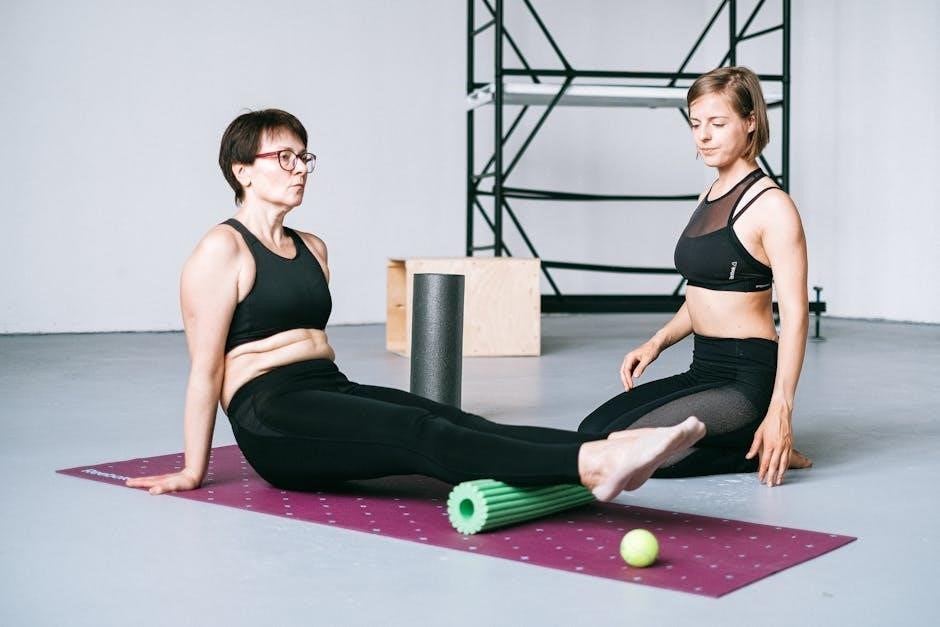
Robust core muscles are fundamental for scoliosis support; PDF guides detail pelvic tilts, bird dogs, and plank variations to enhance spinal stability and control.
Pelvic Tilts
Pelvic tilts, a foundational exercise often detailed in scoliosis rehabilitation PDFs, gently mobilize the lumbar spine and engage core muscles. Begin lying on your back with knees bent and feet flat on the floor.
Slowly tilt your pelvis backward, flattening your lower back against the floor – imagine pressing your belly button towards your spine. Hold this position for five seconds, consciously activating abdominal muscles.
Then, gently arch your lower back, creating a small space between your back and the floor. Hold for five seconds. Repeat this tilting motion ten times, focusing on controlled movements.
PDF resources emphasize maintaining a neutral spine throughout, avoiding excessive arching or flattening. This exercise improves spinal awareness and prepares the core for more complex scoliosis-specific movements, enhancing stability and reducing discomfort.
Bird Dog Exercise
Bird dog exercises, frequently illustrated in scoliosis rehabilitation PDFs, enhance core stability and improve coordination, crucial for managing spinal curves. Start on your hands and knees, ensuring your hands are directly under your shoulders and knees under your hips.
Engage your core and simultaneously extend one arm forward and the opposite leg backward, maintaining a straight line from hand to heel. Avoid arching your back or rotating your hips.
Hold this position for five seconds, focusing on core engagement and balance. Slowly return to the starting position and repeat on the other side.
PDF guides often recommend ten repetitions per side. Proper form, as detailed in these resources, prevents strain and maximizes the exercise’s benefits for scoliosis patients, promoting a stronger, more stable spine.
Plank Variations
Scoliosis rehabilitation PDFs frequently feature plank variations as foundational core strengthening exercises. These build endurance and stability, vital for supporting the spine. The standard forearm plank, detailed in many guides, involves holding a straight line from head to heels, engaging core muscles.
Side planks, also commonly illustrated, target oblique muscles, crucial for correcting lateral imbalances often seen in scoliosis. Maintain a straight line from head to feet, supporting your weight on one forearm and the side of your foot.
PDF resources emphasize proper form – avoiding hip sagging or arching – and suggest starting with 30-second holds, gradually increasing duration. Modifications, like knee bends, are often provided for beginners.
Forearm Plank
Scoliosis rehabilitation PDFs consistently highlight the forearm plank as a cornerstone exercise for core stabilization. Executed by resting on forearms and toes, maintaining a straight line from head to heels, it strengthens abdominal and back muscles. Many PDF guides detail proper alignment: elbows under shoulders, core engaged, and a neutral spine.
Beginners are often advised to start with shorter holds – 20-30 seconds – gradually increasing duration as strength improves. PDF resources emphasize avoiding hip sagging or lifting, which compromises form and effectiveness. Modifications, such as performing the plank on knees, are frequently suggested.
Consistent practice, as outlined in these PDFs, builds endurance and supports spinal alignment, crucial for managing scoliosis.
Side Plank
Scoliosis rehabilitation PDFs frequently feature the side plank, a vital exercise for strengthening oblique muscles and improving lateral spinal stability. Performed by supporting the body on one forearm and the side of one foot, maintaining a straight line, it addresses muscle imbalances common in scoliosis.
PDF guides often illustrate proper form: elbow directly under shoulder, hips lifted, and core engaged. Beginners may modify by bending the lower knee for support. Holding the position for 20-30 seconds, repeated several times on each side, is a typical recommendation.
These PDF resources stress avoiding hip sagging, which reduces effectiveness. Consistent side plank practice, as detailed in these guides, enhances core strength and supports spinal alignment, aiding scoliosis management.
Specific Scoliosis Exercise Approaches
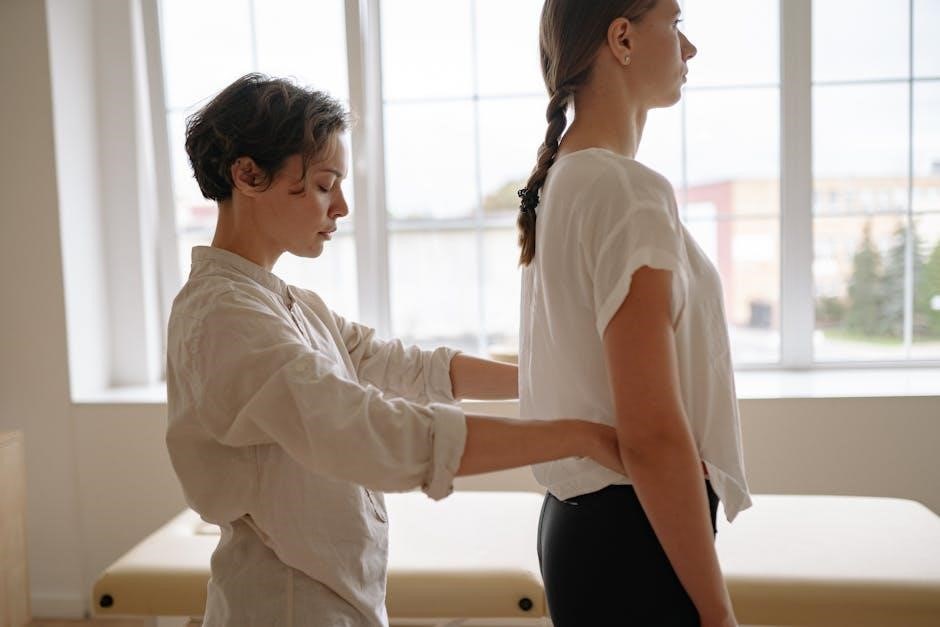
Scoliosis rehabilitation PDFs detail methods like Schroth, SEAS, and Lyon, offering specialized exercises to address spinal curves and improve postural control effectively.
Schroth Method Exercises
Schroth Method exercises, often detailed in scoliosis rehabilitation PDFs, represent a highly specialized approach. These aren’t simply general stretches; they’re three-dimensional corrective movements. A core principle involves postural correction, actively counteracting the spinal curve through specific positioning and muscle engagement.
Breathing techniques in Schroth therapy are fundamental. Patients learn to breathe in a way that expands the concave side of the curve, creating space and improving lung capacity. This isn’t diaphragmatic breathing as commonly taught, but a targeted, asymmetrical breathing pattern.
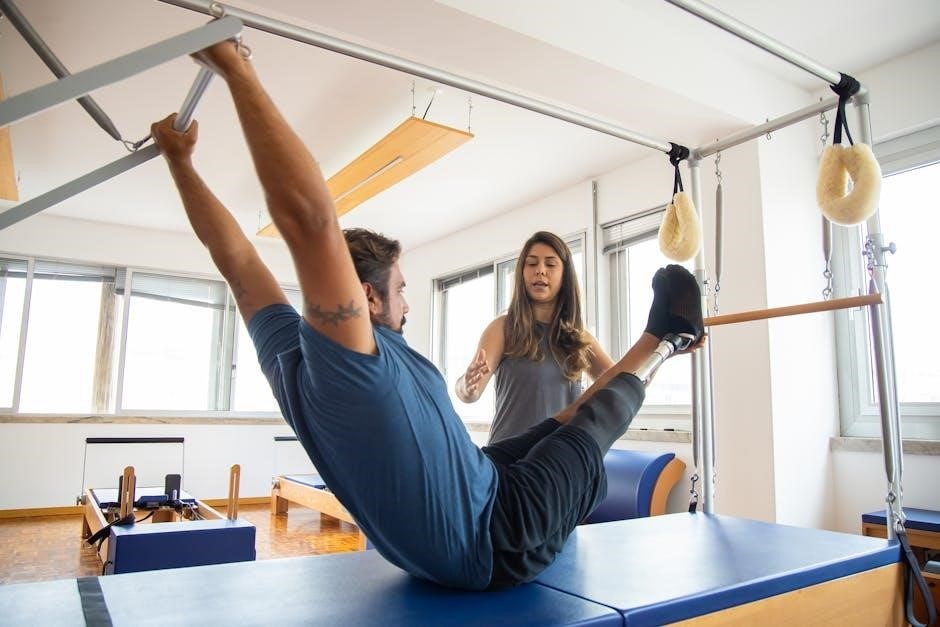
PDF resources will illustrate how to perform these exercises, emphasizing the importance of self-correction and maintaining the corrected posture during functional activities. The goal is to de-rotate, elongate, and stabilize the spine, ultimately improving alignment and reducing pain. Consistent practice, guided by a certified Schroth therapist, is crucial for optimal results.
Breathing Techniques in Schroth Therapy
Schroth therapy’s unique breathing techniques, often visually explained in scoliosis rehabilitation PDFs, are central to its effectiveness. Unlike typical deep breathing, Schroth breathing is asymmetrical and targeted. The aim is to expand the concave side of the scoliotic curve during inhalation, creating internal space and counteracting the rotation.
PDF guides demonstrate how to focus the breath, utilizing specific muscle engagement to achieve this three-dimensional correction. Exhalation involves actively engaging core muscles to maintain the corrected posture. This isn’t merely about oxygen intake; it’s about actively reshaping the rib cage and spine.
Consistent practice, as outlined in these resources, reinforces neuro-muscular patterns, improving postural awareness and stability. Mastering these techniques requires guidance from a certified Schroth therapist to ensure proper form and maximize benefits.
Postural Correction with Schroth
Schroth method PDFs detail postural correction as a core component, moving beyond simple stretching. It’s a highly individualized approach, addressing the unique three-dimensional nature of each scoliosis curve. Exercises aren’t generic; they’re specifically designed to de-rotate, elongate, and correct the spine in all planes of motion.
These PDFs often include detailed illustrations showing how to achieve specific postural corrections, utilizing props and self-correction techniques. Patients learn to actively counteract their curve patterns, engaging specific muscles to realign the spine.
The focus is on creating a new, more balanced posture that can be maintained throughout daily activities. Consistent practice, guided by a certified therapist and reinforced through PDF exercises, is crucial for long-term postural improvement and pain reduction.
SEAS (Scientific Exercises Approach to Scoliosis)
SEAS, detailed in numerous scoliosis rehabilitation exercises PDFs, is a treatment approach rooted in scientific principles and individualized exercise prescription; Unlike generalized programs, SEAS emphasizes a thorough assessment to identify specific curve patterns and muscle imbalances. PDFs showcase exercises categorized by their effect on the scoliosis curve – correction, stabilization, and prevention of progression.
These resources highlight the importance of targeted muscle strengthening and stretching, focusing on muscles directly impacting the scoliotic curve. SEAS PDFs often include detailed exercise protocols, including sets, repetitions, and progression guidelines.
The approach aims to actively correct the curve through specific movements, promoting spinal alignment and improving functional capacity. Consistent adherence to the prescribed exercises, guided by PDF instructions, is vital for achieving optimal outcomes.
Lyon Approach Exercises
The Lyon Approach, frequently detailed in scoliosis rehabilitation exercises PDFs, centers on global postural re-education. These PDFs emphasize correcting postural imbalances through a series of carefully designed exercises, aiming to influence the three-dimensional deformity. Unlike localized approaches, the Lyon method addresses the entire body, recognizing scoliosis as a global postural problem.
PDF resources illustrate exercises focusing on breathing, muscle strengthening, and conscious postural correction. A key element is teaching patients to actively self-correct their posture throughout daily activities. These PDFs often include visual guides demonstrating proper exercise form and technique.
The Lyon Approach prioritizes patient awareness and active participation, empowering individuals to manage their condition long-term. Consistent practice, guided by PDF instructions, is crucial for achieving lasting postural improvements.
Exercises for Curve Flexibility & Correction
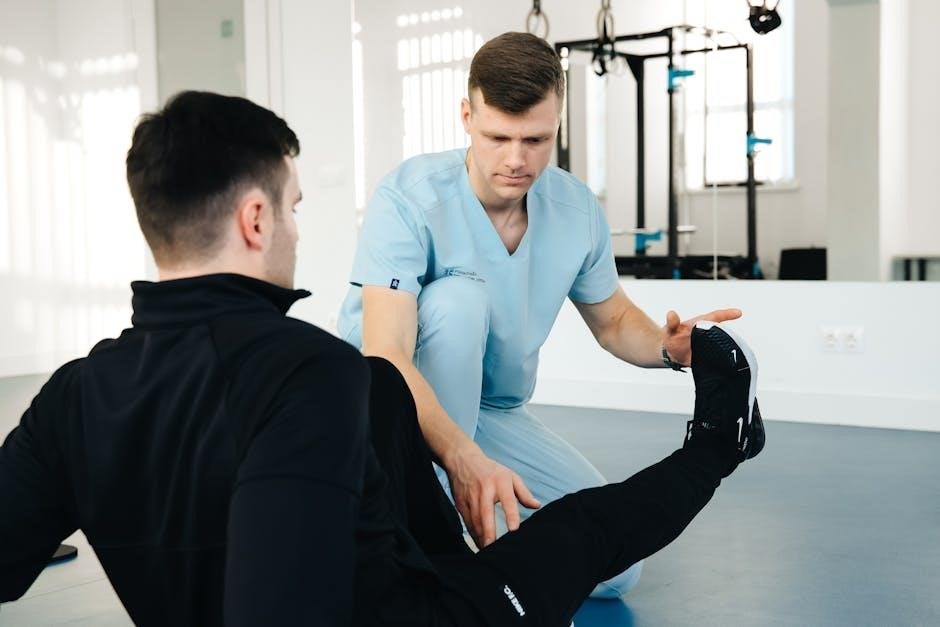
Scoliosis PDFs detail side bending, rotation, and elongation exercises to enhance spinal mobility, address curve patterns, and promote improved postural alignment.
Side Bending Exercises
Scoliosis rehabilitation PDFs frequently emphasize side bending exercises as a crucial component for improving curve flexibility. These exercises aim to address the asymmetry inherent in scoliosis by gently stretching the convex side of the curve while strengthening the concave side.
Typically, these exercises involve standing or lying down and intentionally bending towards the weaker side of the curve, focusing on creating space and elongation. A common instruction found in these PDFs is to perform 10 repetitions on each side, visualizing lengthening the spine during the movement.
However, it’s vital to remember that scoliosis curves often have a spiral component. Therefore, simply bending to the side may not be sufficient; instead, patients are encouraged to visualize and achieve a three-dimensional correction, elongating the back and neck simultaneously.
Spinal Rotation Exercises
Scoliosis rehabilitation PDFs often incorporate spinal rotation exercises to counter the rotational component frequently present in scoliosis curves. These exercises aim to restore balance and improve spinal mobility, addressing the twisting often seen in the spine.
PDF guides typically detail exercises performed while seated or lying down, involving gentle twisting motions towards the weaker side of the curve. The focus is on controlled movement, avoiding any forceful or jerky actions. Patients are often instructed to visualize rotating from the lower back, maintaining a neutral spine.
Considering the spiral nature of many scoliosis curves, simple rotation may need modification. PDFs emphasize the importance of combining rotation with elongation, imagining lengthening the spine as you twist, to achieve a more comprehensive correction.
Elongation Exercises
Scoliosis rehabilitation PDFs consistently highlight elongation exercises as crucial for creating space within the concavity of the curve. These techniques aim to decompress the spine and improve postural alignment, counteracting the compression often associated with scoliosis.
PDF guides frequently feature exercises like “cat-cow stretch” variations, emphasizing a slow, controlled arching and rounding of the back. Another common exercise involves lying supine and gently drawing the chin towards the chest, lengthening the cervical spine.
Given the spiral nature of scoliosis, PDFs often instruct patients to visualize elongating not just vertically, but also diagonally, following the curve’s path. This nuanced approach aims to address the three-dimensional nature of the condition, promoting a more holistic correction.
Exercises to Address Muscle Imbalances
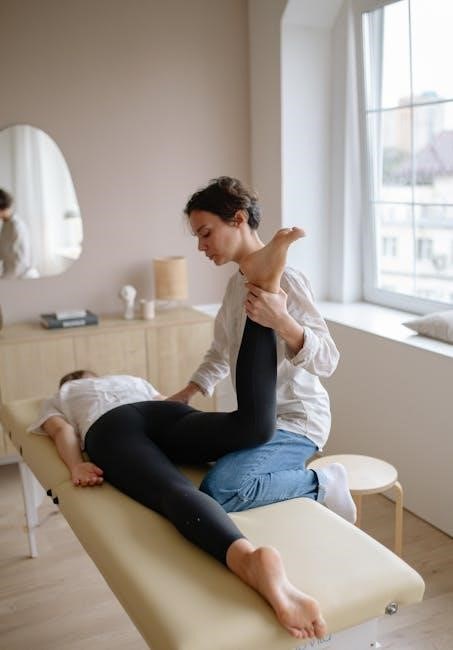
Scoliosis PDFs detail targeted exercises to strengthen weakened muscles and stretch tight ones, restoring spinal balance and supporting proper alignment for lasting relief.
Strengthening Weakened Muscles
Scoliosis rehabilitation PDFs emphasize strengthening muscles often compromised by spinal curvature. These programs frequently include exercises targeting the core – pelvic tilts are foundational, improving pelvic control and stability. Bird dog exercises enhance core and back muscle endurance, promoting spinal alignment. Further strengthening focuses on the back extensors and multifidus muscles, crucial for supporting the spine against gravity.
PDF guides often illustrate variations to accommodate different curve patterns and fitness levels. Progressive resistance is key; starting with bodyweight exercises and gradually incorporating resistance bands or light weights. Consistent strengthening builds a muscular corset, counteracting the deforming forces of scoliosis and improving overall postural control. Remember, proper form, as detailed in the PDFs, is paramount to avoid injury and maximize effectiveness.
Stretching Tight Muscles
Scoliosis rehabilitation PDFs consistently highlight the importance of addressing muscle imbalances through targeted stretching. Curves often lead to tightness in specific muscle groups, restricting movement and exacerbating the scoliosis. Common stretches include those for the paraspinal muscles, hamstrings, hip flexors, and chest muscles.
PDF guides detail techniques like side bending stretches to address asymmetry and improve spinal flexibility. Spinal rotation stretches, performed cautiously, can also help release tension. It’s crucial to hold each stretch for an appropriate duration – typically 20-30 seconds – and to breathe deeply throughout. The PDFs emphasize gentle, controlled movements, avoiding any bouncing or forcing of the stretch. Regular stretching, as prescribed in the PDF, restores muscle length and improves overall spinal mobility.
Bracing & Exercise Combinations
Scoliosis PDFs detail exercises complementing bracing, like pelvic tilts and core work, maintaining muscle strength and flexibility during treatment for optimal outcomes.
Exercises While Wearing a Milwaukee Brace
PDF resources emphasize specific exercises for patients utilizing the Milwaukee brace, focusing on maintaining muscle tone and preventing deconditioning. These routines typically include pelvic tilts performed while lying down with bent knees, held for a count of five and repeated ten times daily.
Additional exercises involve gentle trunk bending and side stretching, also held for five counts and repeated ten times each day. Maintaining active participation is crucial; exercises seven and eight, often involving postural adjustments, should be performed frequently throughout the day.
The goal is to counteract the restrictive nature of the brace, promoting circulation and preventing muscle atrophy. Scoliosis rehabilitation PDFs often provide detailed illustrations and instructions to ensure proper form and maximize effectiveness, aiding in a successful bracing experience.
Exercises for Post-Brace Rehabilitation
Post-brace scoliosis rehabilitation PDFs detail a progressive exercise program to restore muscle strength, flexibility, and postural alignment after brace removal. Initial exercises focus on core stabilization, including pelvic tilts and bird-dog exercises, to rebuild foundational support.
Gradually, more dynamic movements like side planks and gentle spinal rotations are introduced, enhancing trunk control and flexibility. Strengthening weakened muscles and stretching tight ones are key components, addressing imbalances developed during bracing.
PDF guides often emphasize the importance of continued postural awareness and self-correction techniques. A tailored approach, guided by a scoliosis specialist, ensures safe and effective progression, maximizing long-term stability and minimizing recurrence.
Important Considerations & Precautions
Scoliosis rehabilitation PDFs stress consulting a specialist, prioritizing proper form, and carefully progressing exercises to avoid injury and maximize benefits.
Consultation with a Scoliosis Specialist
Before initiating any scoliosis rehabilitation exercise program—whether sourced from a PDF or elsewhere—a thorough consultation with a qualified scoliosis specialist is paramount. Self-treating based solely on online resources can be detrimental, as scoliosis presentations are uniquely individual.
A specialist, such as an orthopedic surgeon or a physical therapist specializing in scoliosis, can accurately assess your curve’s severity, type, and progression. This assessment informs a personalized exercise plan tailored to your specific needs and limitations. They will identify any contraindications or precautions necessary for your case.
Furthermore, a specialist can ensure proper form and technique during exercise execution, minimizing the risk of exacerbating the curve or causing injury. They can also monitor your progress and adjust the program accordingly, optimizing your rehabilitation journey. Relying on a professional ensures safe and effective implementation of exercises found in scoliosis rehabilitation PDFs.
Proper Form and Technique
Executing scoliosis rehabilitation exercises with impeccable form and technique is non-negotiable for maximizing benefits and preventing harm. Simply following instructions from a PDF isn’t enough; subtle nuances significantly impact effectiveness.
Incorrect form can reinforce improper movement patterns, potentially worsening the spinal curve or causing undue stress on surrounding muscles and joints. Focus on controlled movements, engaging the correct muscle groups, and maintaining proper spinal alignment throughout each exercise.
If utilizing a PDF guide, consider supplementing it with video demonstrations or, ideally, guidance from a physical therapist. They can provide real-time feedback, correcting any deviations from optimal technique. Prioritize quality over quantity; a few repetitions performed correctly are far more valuable than numerous repetitions with flawed form. Consistent, precise execution is key.
Progression and Modification of Exercises
Scoliosis rehabilitation isn’t static; a PDF guide should be viewed as a starting point, not a rigid prescription. Progression and modification are crucial for continued improvement and preventing plateaus. As strength and flexibility increase, exercises must become more challenging to maintain their effectiveness.
This might involve increasing repetitions, sets, or resistance (using bands or weights). However, listen to your body! Pain is a signal to stop or modify. A PDF may offer variations for different fitness levels; utilize these.
Individuals with varying curve severity or neuromuscular involvement will require tailored adjustments. A physical therapist can provide personalized modifications, ensuring exercises remain safe and effective. Don’t hesitate to seek professional guidance to optimize your rehabilitation journey and avoid overexertion or injury.